
Read my tips to get the most from the amazing Snettisham Spectacular, a wading bird display on the West Norfolk coast….. one of the best things to do in Norfolk.
If you’re looking for something a bit different to do in Norfolk, this is it.
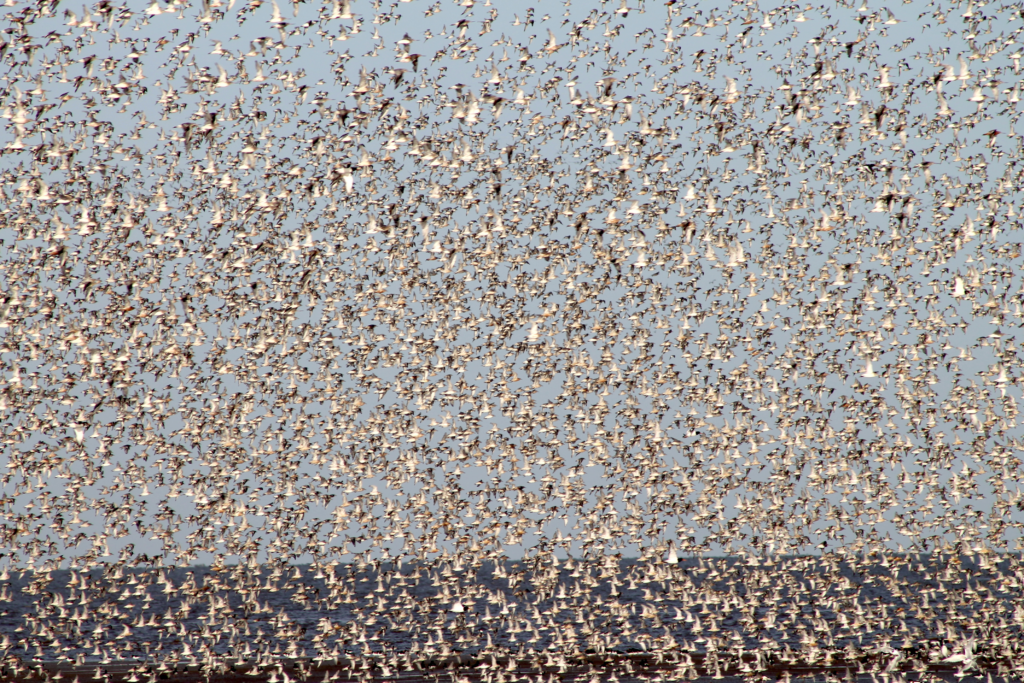
I had no idea what to expect when I set out to see the Snettisham Spectacular at RSPB Snettisham. I had never been before and I was amazed when thousands of birds filled the skies. It’s an impressive sight and totally worth getting up ridiculously early for. It has to be one of the best wildlife experiences in the UK not just Norfolk.
I am not a bird-watcher but all the photos used here are my own. I made a few rookie errors but read on so you can learn from my mistakes!
This breathtaking natural phenomenon only happens a few days a year during Winter and Spring, when the tide is particularly high. Check the RSPB website for exact dates and timings.
https://www.rspb.org.uk/days-out/reserves/snettisham/wader-dates
Snettisham Spectacular Tips for beginners
One
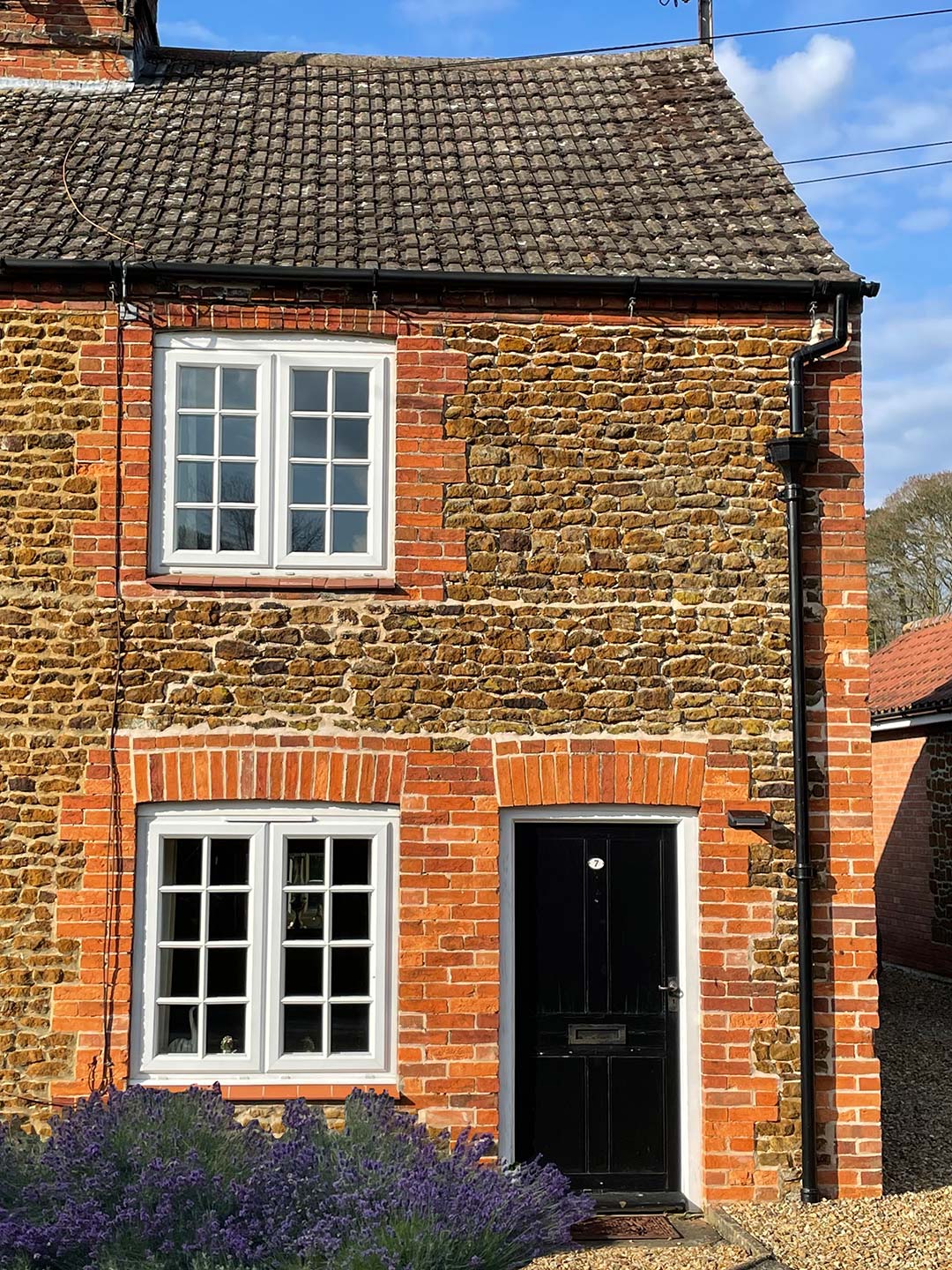
Stay at Clover Cottage
A traditional, cosy cottage in Dersingham and it’s just a 5 minute drive away. www.clovercottagenorfolk.co.uk
Two
Pre-book your parking
There is only a small car park, and I was super lucky to get a spot. However a new parking charge and booking system has been introduced for this year. Check it out here https://events.rspb.org.uk/events/136444 There is another car park at Snettisham Beach if the RSPB one is full, charges apply and there is also a height restriction.
Three
Use the toilet at the car park
As you leave the car park, there is a new, waterless composting toilet. This is the only toilet on the reserve so go when you can!
Four
Be sure to get there early
The reserve is a good 20 minute walk from the car park so factor this into your timings. The RSPB website gives recommended times to leave the car park.
Five
Take your own drinks and snacks
There are no facilities whatsoever at the reserve if you start to get peckish or if you want to be warmed by a hot drink.
Six
Wrap up warm
This is the East coast, it can be quite chilly. It is exposed to the elements and there is no shelter, except from the hides. Gloves and hat are essential, you could even take rechargeable hand warmers and a flask of soup or coffee.
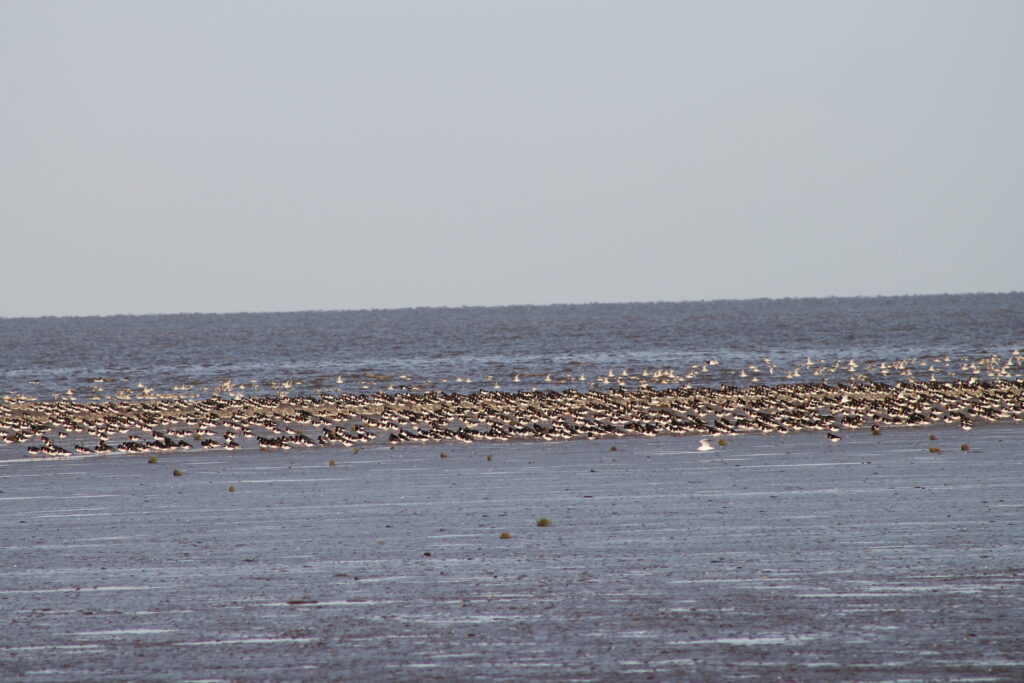
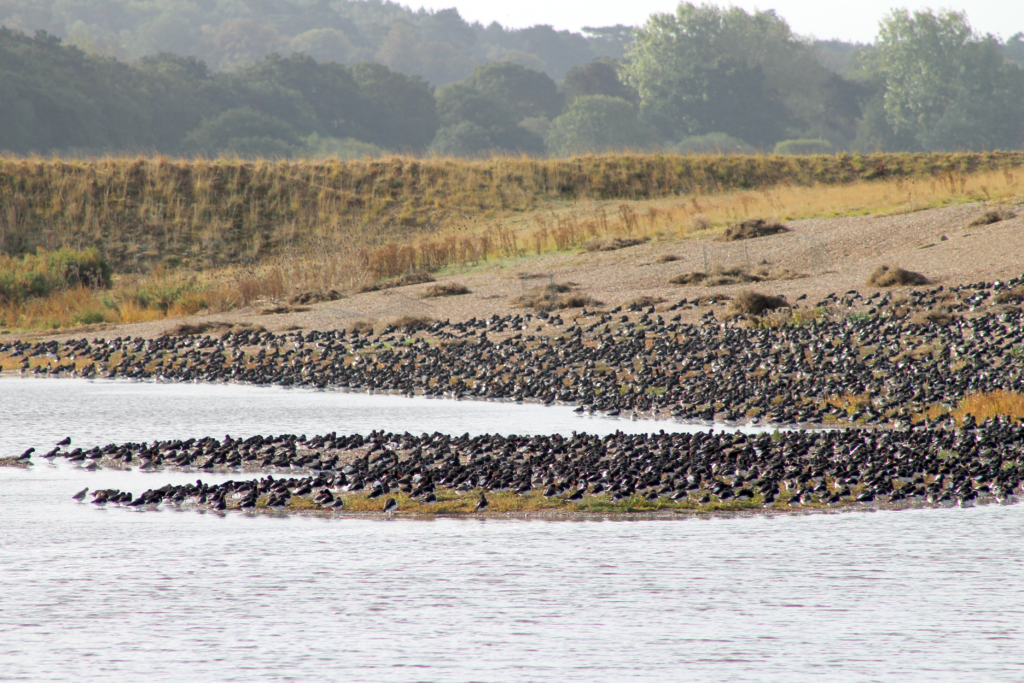
Oystercatchers feeding on the mudflats.
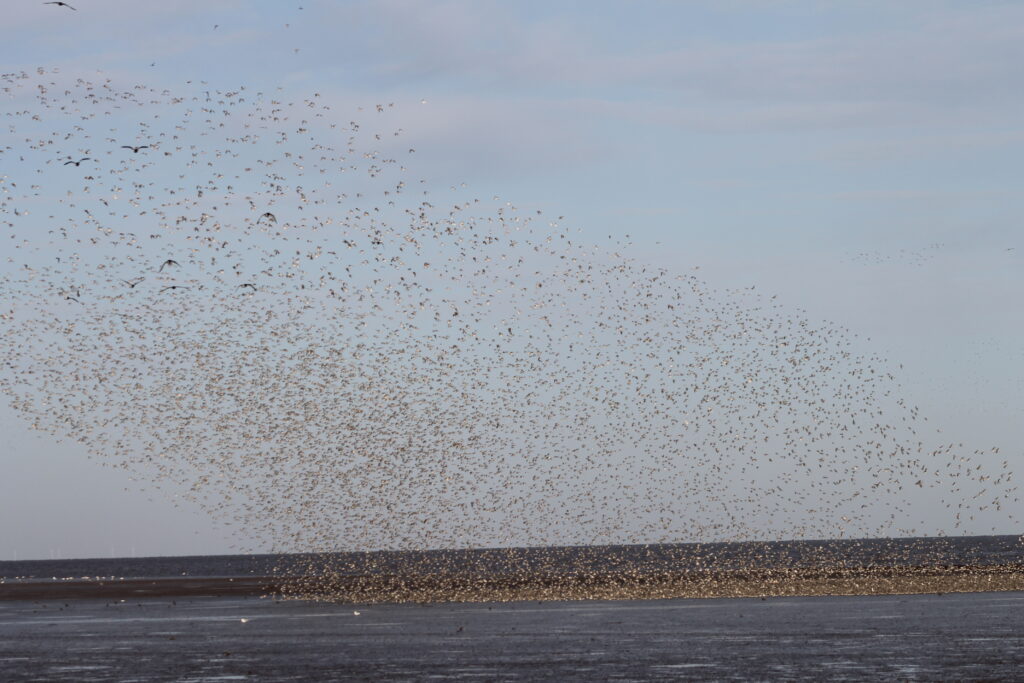
Birds taking flight.
What actually happens, why and where to stand.
I really had no idea what was going to happen or why, so I didn’t really know where to stand to have the best view but read on and you will!
At low tide the wading birds are out feeding on the uncovered mudflats and there are tens of thousands of them! Knot, Dunlin, and Oystercatchers bring the main character energy. You can see them from anywhere along the sea wall or on the beach walk to the hides (see map)
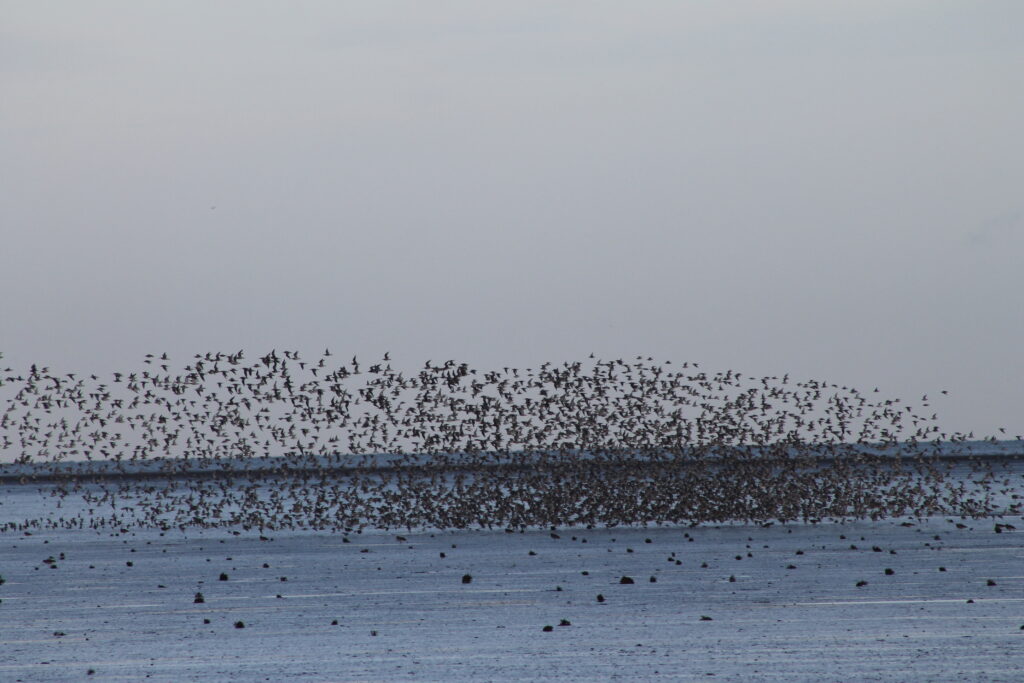
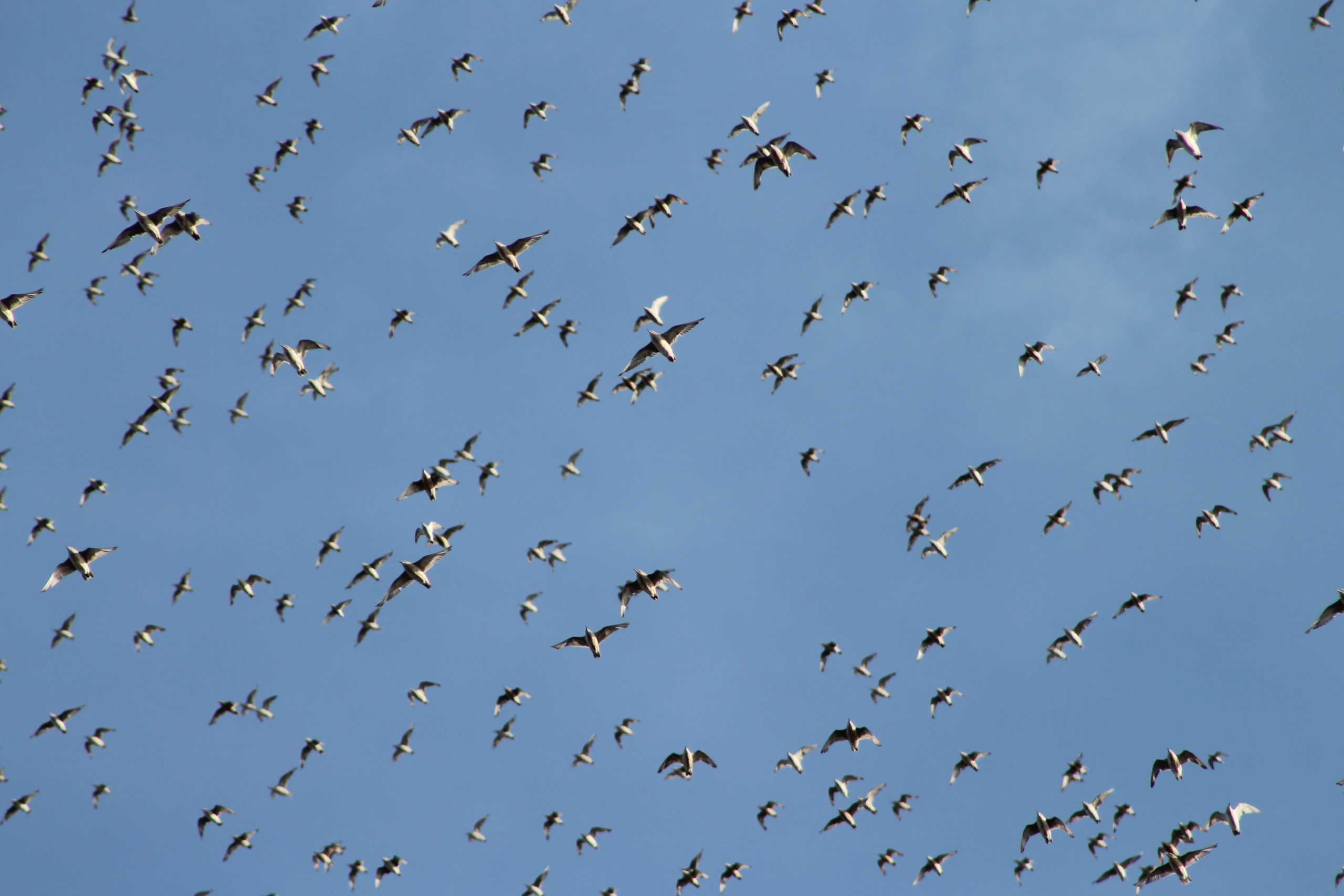
As soon as the tide starts to come in, the sky fills with flocks of birds lifting off from the mudflats as the incoming water covers up their feeding grounds and pushes them off. They twist and whirl around the sky in a spectacular synchronized display. It’s remarkable how they fly so close together and in formation without crashing into each other. Photos just don’t capture the magic, you need to be there!
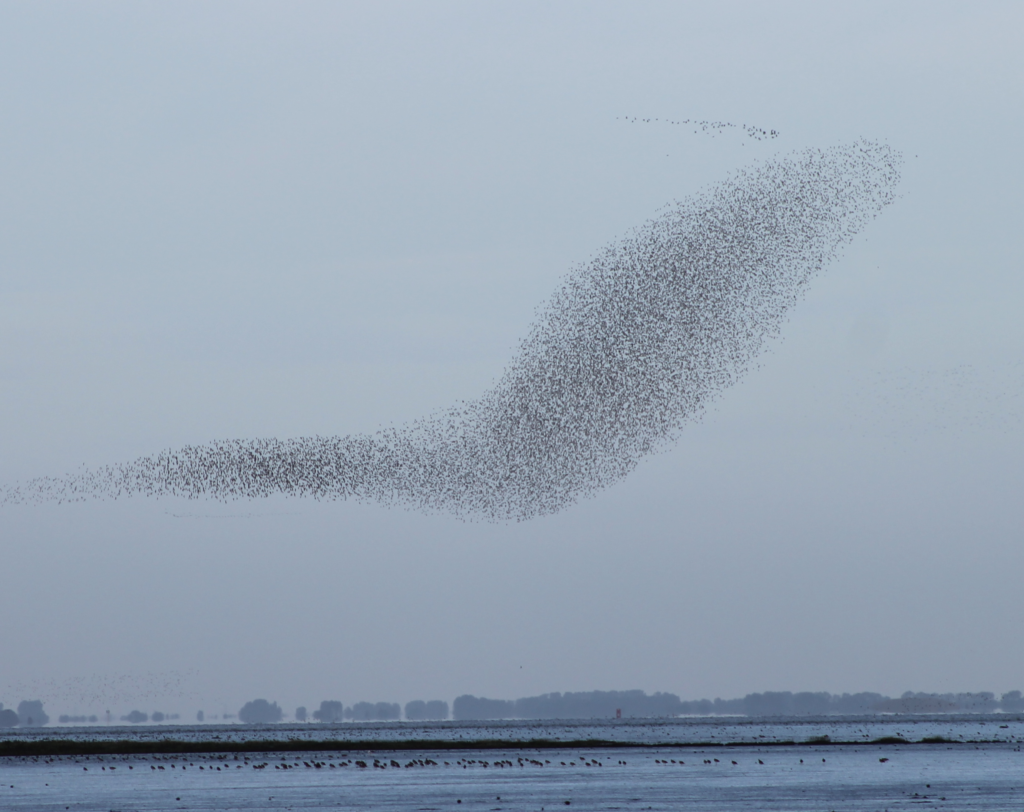
Knot murmuration, Snettisham, Norfolk
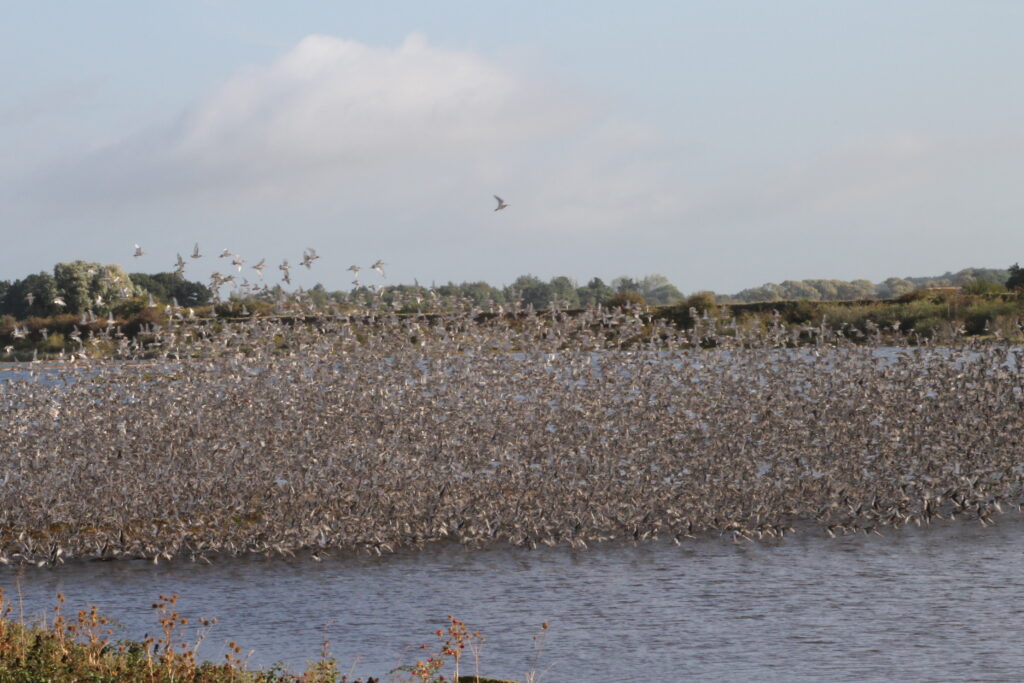
The birds then start to fly inland, to roost on the small islands on the lagoons at the reserve. They reminded me of a war film with squadrons of bomber planes putting the enemy under relentless attack, and they just keep on coming and coming – in their thousands, it’s very dramatic (cue Dambusters theme)
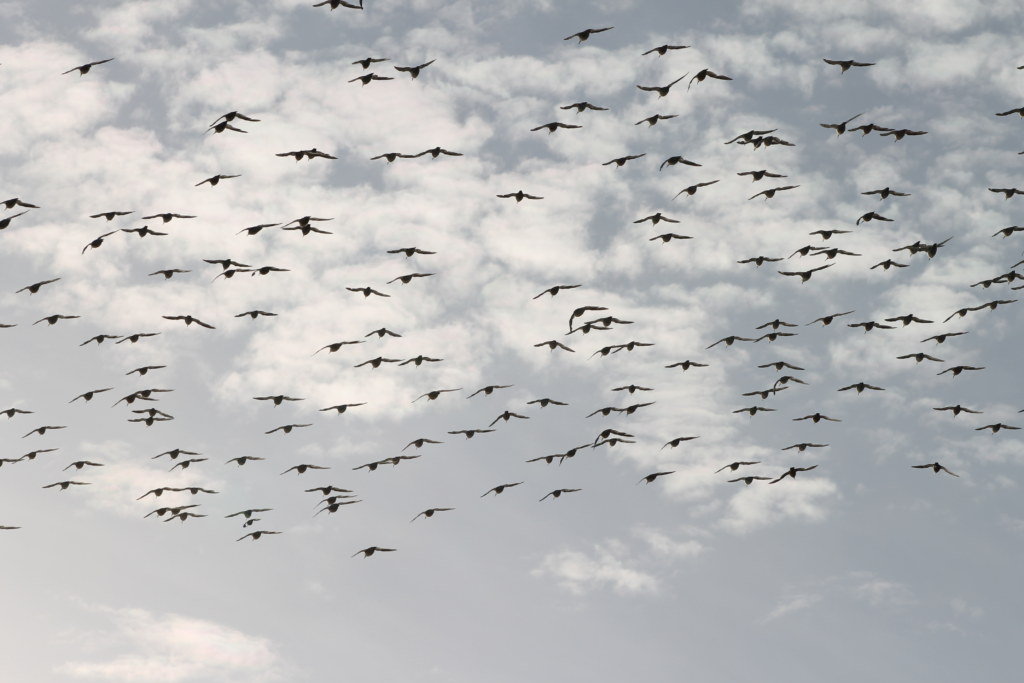
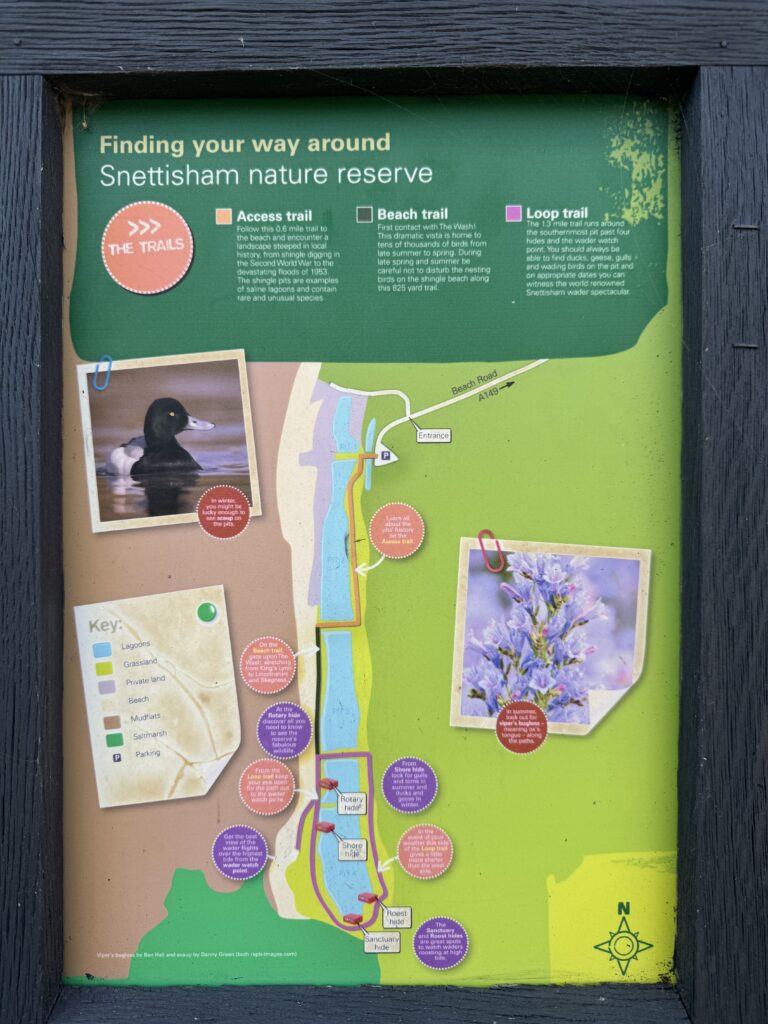
The best place to stand to watch the incoming flocks is near the Shore Hide or a bit further along at the Wader Watch Point. The birds will be much closer to you as they fly overhead coming in to land. It’s mesmerising and is really one of the most unique things you can see on the Norfolk coast.
Do you need binoculars?
I didn’t have any and I’m sure they would have enhanced my visit, but I was able to see enough without them. I did take my camera with long lens though, again – not essential.
There are plenty of photographers with tripods and serious looking equipment but don’t let that put you off, I still got some great shots and videos, even with my iphone. If you are an amateur photographer there are some great tips here;
At the hides
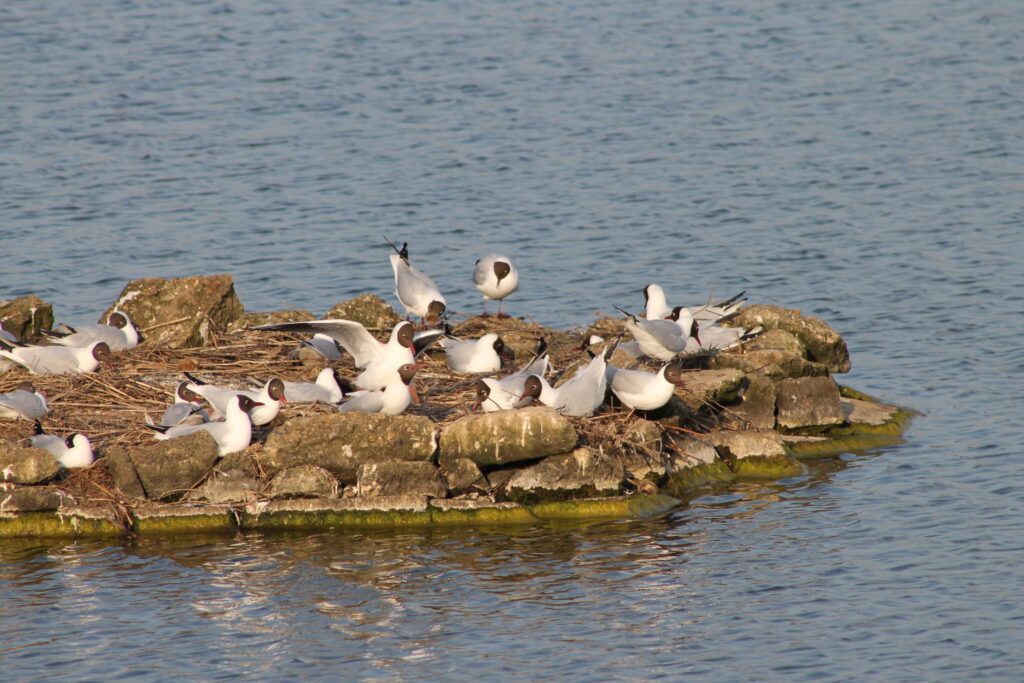
This is the best place to see the lagoons, in Shore Hide or Rotary Hide. The little islands of the lagoon are absolutely crammed with birds, and as another flock come into land, you think there can’t possibly be any space for them, but somehow there is, and everyone jostles about for the new arrivals. The hides can become quite busy, but everyone is very polite and you will get your turn at the windows if you’re patient. I felt woefully inadequate in being able to recognize and name the different species, but actually it doesn’t matter and there is always someone to ask. Expect to see….
- Red Knot
- Oystercatchers
- Dunlin
- Cormorants
- Black Headed Gull
- Pied Avocet
- Plovers
- Black Tailed Godwits
and if you’re super lucky…..
- Marsh Harrier
- Peregrine Falcon
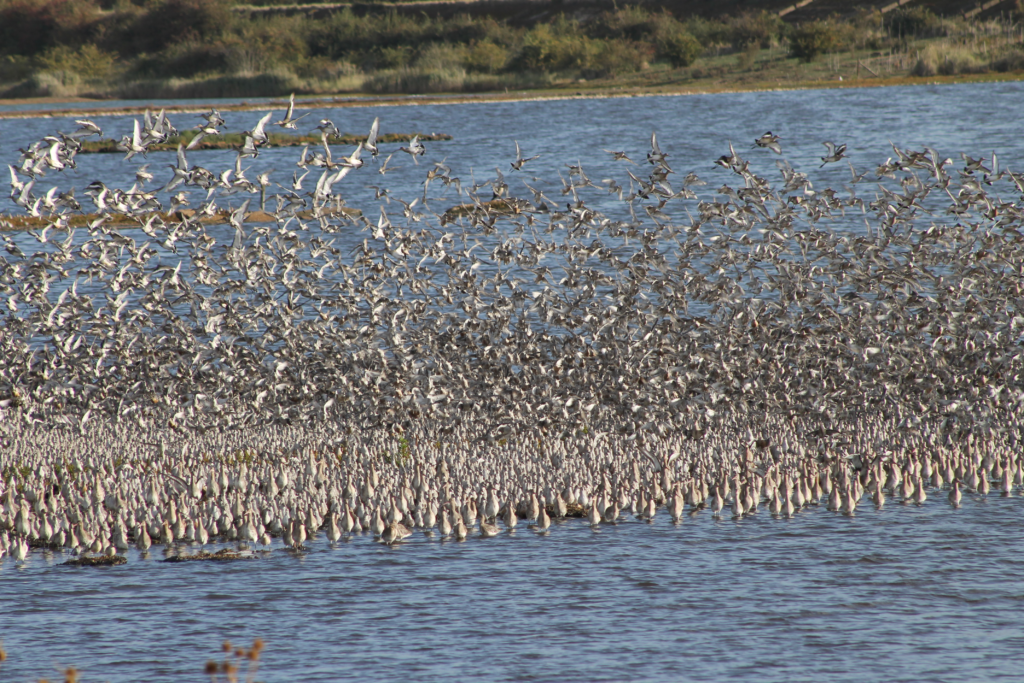
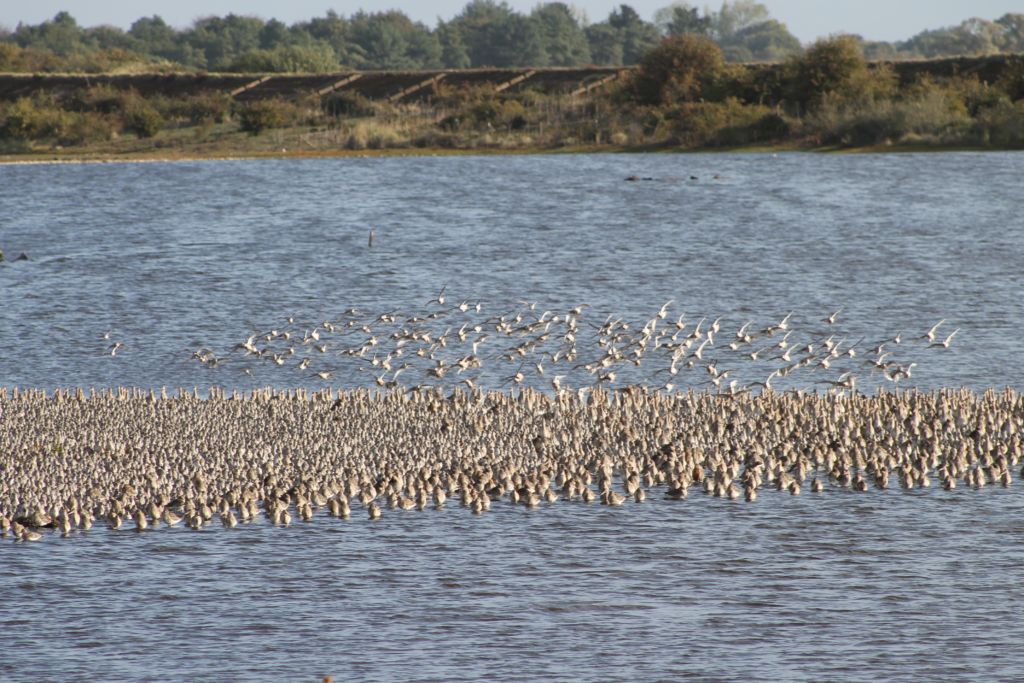
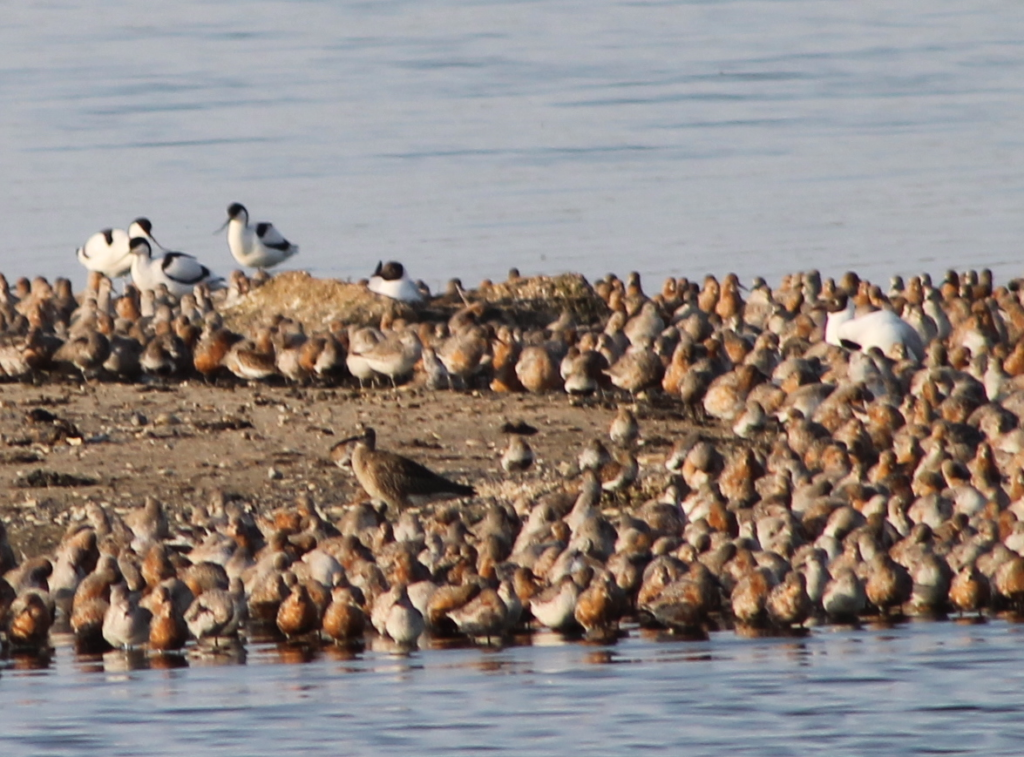
A Whimbrel amongst the Knot and Avocet.
There were some unusual species that everyone in the hide got excited about, so if you are an experienced birder, there is still sure to be something you’ll find interesting.
The only cost was for the car park…
so the whole experience is extremely good value and if you’re a RSPB member, even the car park is free.
It’s a great free activity for kids, which they’ll enjoy but they may get bored – so take snacks, drinks and something quiet to occupy them.
Some people have travelled miles for this unique birdwatching and photography opportunity so keeping noise to a minimum will be appreciated.

Book your break
to coincide with the Spectacular dates. As there are no facilities at the RSPB, it’s great to return to cosy Clover Cottage for a cooked breakfast if you’re watching at sunrise, or maybe a hot drink from the Tassimo if it’s at sunset.